
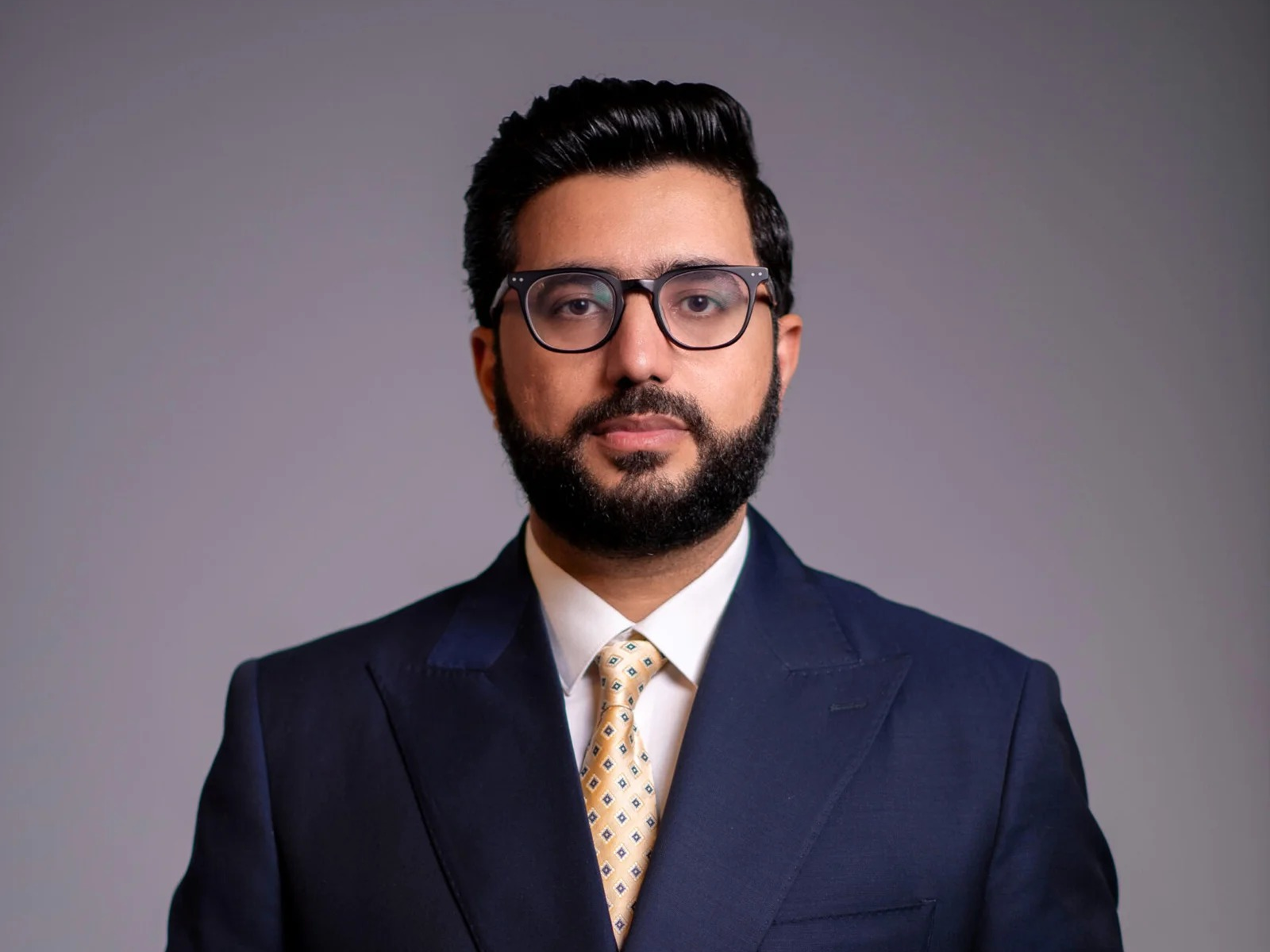
On the 4th of July 2026, one of the region’s most respected plastic and reconstructive surgeons was appointed A. Professor — not as a new beginning, but as the formal recognition of a body of work that had been building, quietly and rigorously, for over fifteen years.
There are titles that are conferred, and titles that are earned. The distinction matters in medicine more than in most fields, where the distance between a credential on paper and a body of work behind it can be wide enough to define a career — or expose one. When Tanta University appointed A. Professor Dr. Samir Ghoraba on the 4th of July 2026, it was conferring the former in full recognition of the latter.
The promotion did not create a new version of Dr. Ghoraba. It named the one that already existed.
The Weight of the Title
In Egyptian academic medicine, an appointment to this rank is not a formality. It is the culmination of a process that demands documented clinical output, peer-reviewed research, institutional teaching, and the kind of sustained contribution to a discipline that survives scrutiny at the highest level. It is the academy’s way of saying, formally and on record: this surgeon’s work is not only excellent — it is generative. It produces knowledge that others can build on.
For A. Professor Dr. Samir Ghoraba, that record spans more than fifteen years of consecutive, documented surgical practice, a PhD in Plastic and Reconstructive Surgery earned from the Faculty of Medicine in 2019, and a publication record that has accelerated steadily into peer-reviewed journals on three continents. In December 2024, Plastic and Reconstructive Surgery – Global Open — the journal of the American Society of Plastic Surgeons — published his study of 641 consecutive patients who underwent deep plane neck lift and deep tissue sculpture between 2014 and 2023. Complication rates were reported in full: subcutaneous serous collection at 4.3%, marginal mandibular neuropraxia at 3.3%, hematomas at 2.96%. The paper did not curate its outcomes. It reported them — the way science is supposed to, and clinical publishing often does not.
That study is one of eleven peer-reviewed publications in his record to date — spanning reconstructive microsurgery, rhinoplasty technique, facelift drain management, and the surgical management of permanent filler complications — and it is the kind of output on which academic appointments, at their most meaningful, are built.
A Career Built Across Four Continents
A. Professor Dr. Samir Ghoraba graduated from the Faculty of Medicine with Excellence and Honours in 2010, completed his MRCS with the Royal College of Surgeons of England across Parts A and B, and went on to pursue advanced international fellowships that took his training across four continents before he established his primary base in Cairo.
At Chang Gung Memorial Hospital in Taiwan, he trained in microsurgery — one of the most technically demanding disciplines in reconstructive surgery, requiring precision at the level of vessels measured in millimetres. At Queen Elizabeth Hospital in Birmingham, he completed an Honorary Clinical Fellowship in Head and Neck Reconstruction. In the United States and across the United Kingdom and Turkey, he pursued advanced training in facial aesthetics, deep plane facelift technique, and preservation rhinoplasty, working alongside some of the most recognised names in the field.
The clinical portfolio that followed is verifiable in the published record: over 3,000 deep plane facelifts, more than 2,500 rhinoplasties, over 1,000 blepharoplasties, 750 brow lifts, and 500 lip lifts — alongside more than 300 microsurgical reconstructions and a reconstructive caseload spanning hand and limb surgery, craniomaxillofacial reconstruction, peripheral nerve surgery, and free tissue transfer. His patient base draws from Egypt, the Gulf, and internationally.
He currently holds active medical licences in Egypt, the United Kingdom (GMC Registration 7697844), the United Arab Emirates, and Kuwait — a regulatory footprint that reflects the international reach of his practice.
What an Academic Title Changes — and What It Confirms
The rank of A. Professor carries with it a formal mandate: to teach. Not as an optional extension of a busy clinical practice, but as an institutional responsibility to the surgeons who will inherit the field.
For A. Professor Dr. Ghoraba, this is less a new obligation than a new name for something he has been doing for years. As Lecturer at the Faculty of Medicine since 2019 — and as Fellowship Director of the Facial Plastic Surgery and Aesthetics Programme since 2018 — he has mentored more than forty international surgeons annually, led over fifty workshops, and directed more than seven cadaveric anatomy courses. The surgeons he has trained have come from across the Arab world and beyond.
Internationally, that teaching identity has taken him to some of the most demanding educational stages in the field: the ISAPS Annual World Congress, IMCAS, the American Academy of Facial Plastic and Reconstructive Surgery annual meeting, the British Aesthetic Meeting, the Swiss Plastic Surgery Annual Meeting, the Qatar Plastica Conference, and the NYC Facelift and Rhinoplasty Master Course, among many others — presenting, demonstrating live surgery, and leading cadaveric dissection before peers at the highest level.
His faculty role at The Face Course in Cambridge — a cadaveric dissection programme training surgeons in sub-SMAS facelift and comprehensive facial rejuvenation technique alongside leading consultants from the United Kingdom and Europe — places him at the table where the next generation of the technique is being actively refined.
And as the Founder and Chair of Cairo FACE International Summit — the Cairo Facial Aesthetic Conference and Exhibition, which drew more than 3,000 registered physicians to its 2026 edition — he has built one of the region’s most significant platforms for transferring surgical knowledge across borders and generations. The Rising Star Competition, which awards its winners fully sponsored fellowships in deep plane facelift and rhinoplasty rather than trophies, is perhaps the clearest expression of what teaching looks like when it is taken seriously: not inspiration, but infrastructure.
The academic appointment formalises what this record has been building toward. The surgeon who teaches in Cambridge, convenes in Cairo, and mentors forty surgeons a year now holds the institutional rank that the breadth of his educational contribution has long warranted.
To be recognised by one’s institution is one thing. To have earned that recognition through the operating theatre, the research page, and the teaching room simultaneously — that is something else entirely.
— A. Professor Dr. Samir Ghoraba
The Surgeon as Standard-Bearer
There is a version of academic medicine that exists in parallel to clinical practice — the conference circuit, the committee membership, the title accumulated at a distance from the operating theatre. A. Professor Dr. Ghoraba does not occupy that version.
His academic work and his clinical work are the same work, conducted at the same standard, and the published record is the proof. Eleven peer-reviewed papers. A randomised controlled trial on hemostatic management after deep plane facelift, published in Aesthetic Plastic Surgery in 2025. Three studies on the surgical management of permanent filler complications — a growing clinical problem the field has been slow to address — published across Aesthetic Surgery Journal Open Forum, PRS Global Open, and the ISAPS Aesthetic Plastic Surgery Journal in 2025 and 2026. A piezo-assisted osteotomy study in rhinoplasty. A microsurgical reconstruction series. Across every subspecialty he operates in, there is a published account of what he did, what worked, and what did not.
This is what the rank of A. Professor, at its most meaningful, is designed to recognise: not the accumulation of years, but the accumulation of contribution. Work that has moved the field forward, been tested against the scrutiny of peers, and been made available — through publication, through teaching, through open surgical demonstration — to everyone who comes after.
The next generation of surgeons in this region deserves access to the same standard of education that exists anywhere in the world. That has always been the work. The title simply makes it official.
— A. Professor Dr. Samir Ghoraba
What Comes Next
An academic appointment is not a conclusion. In the framework that A. Professor Dr. Ghoraba has spent his career constructing, it is the beginning of a more formally empowered chapter — one in which the relationship between research, teaching, and clinical innovation is not managed in the margins of a surgical practice but embedded at its institutional core.
The pipeline he has already built — from the operating theatre to the peer-reviewed page, from the congress floor to the cadaveric course, from Cairo to Cambridge and beyond — now has an academic rank behind it. A filler-based “true facelift” technique, developed through his expertise in layer 4 injections and currently under peer-review publication, signals that the research output is not slowing. The Fellowship in Facial Plastic Surgery and Aesthetics he directs at Opal Aesthetics and Cairo FACE continues to receive competitive applications from surgeons internationally.
The field of plastic and reconstructive surgery in Egypt has long produced surgeons of international calibre. What A. Professor Dr. Samir Ghoraba’s appointment represents — in its timing, its institutional grounding, and the fifteen-year body of work behind it — is a moment in which that calibre becomes, formally and on record, a standard rather than an exception.
The title was earned. Now the work it authorises begins.
A. Professor Dr. Samir Ghoraba, MD, PhD, MRCS, MSc, is a Consultant Plastic and Reconstructive Surgeon practising in Cairo and Dubai. He is the Founder and Chair of Cairo FACE International Summit, Founder and CEO of Opal Aesthetics Clinics, and a faculty member of The Face Course, Cambridge. His fellowship programme is open to international applicants at www.drsamirghoraba.com/fellowship.
 English
 Arabic
 French
 Spanish
 Chinese (Simplified)